SST and service charge on a Malaysian cafe bill, explained
By Janice · Updated 2026-08-14

The most common surprise at the end of a cafe meal in Kuala Lumpur is a total that is well above the menu prices. Usually the gap is tax and service charge, and it is predictable once you know how they stack. This guide shows the arithmetic so you can work out the real price at the table.
The two charges
SST is Malaysia’s sales and service tax. Many cafes that are registered for it add 6% to the bill. Service charge is separate and set by the cafe, and 10% is common in sit-down places. Not every cafe adds either one, and smaller counter-service outlets often show all-in prices.
On a menu, ”++” after a price is shorthand for “plus service charge and tax”. If you see it, the number is not what you will pay.
How they stack
The two charges are usually applied in order: service charge first, then SST on the subtotal that includes it. That is why the uplift is a bit more than 16%, not exactly 16%.
| Menu total | With 10% service charge | With SST added on top | Multiplier |
|---|---|---|---|
| RM50 | RM55.00 | RM58.30 | 1.166 |
| RM100 | RM110.00 | RM116.60 | 1.166 |
| RM200 | RM220.00 | RM233.20 | 1.166 |
If a cafe charges only the service charge, the multiplier is 1.10. If it charges only SST, it is 1.06. If the menu is all-in, it is 1.00.
Reading your receipt
Check three lines on the way out:
- The subtotal, which should match what you ordered.
- The service charge line, if any, and its percentage.
- The tax line, with the rate shown.
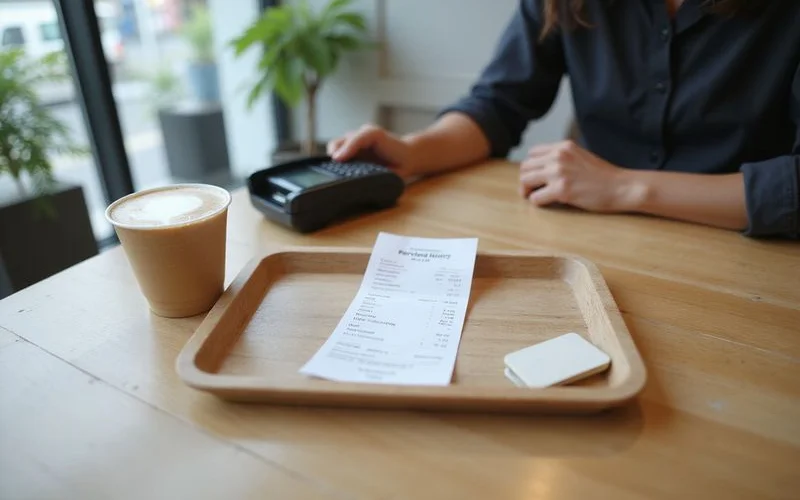
If a line looks wrong, ask politely at the counter before you pay. Staff can usually explain a charge in a few seconds.
Splitting a group bill
Group meals magnify the effect. A table of six that orders RM300 of food and drinks pays about RM350, not RM300, so an even split of RM50 each would leave the person collecting money short. Two approaches work well:
- Split by items, then multiply each person’s subtotal by 1.166 if both charges apply.
- Split evenly, but divide the final total from the receipt, not the menu prices.
The directory’s group bill estimator uses the same 1.166 multiplier, so its figure includes both charges. It also shows a low-to-high range because menu pricing differs from one cafe to the next.
Choosing with the charges in mind
A cheaper-looking menu with ”++” can cost the same as a slightly pricier all-in menu. When you are comparing two cafes on price, put both on the same footing: multiply the ++ menu by 1.166 and compare the results. Reviewers rarely mention the charges, so the receipt is your best source. For a wider view of typical prices, see our guide on what a cafe visit costs in Kuala Lumpur.
Our scoring method does not factor tax or service charge into cafe scores, since reviewers rarely report them. The home page lists cafes across Kuala Lumpur if you want to compare menus directly.
This is general information about how charges are commonly applied, not tax advice. The cafe’s own receipt is the authority on what applies to your bill.
Frequently asked questions
- What does ++ mean on a cafe menu?
- It means the listed price does not yet include service charge and tax. Expect the final bill to be higher than the number you see.
- Is service charge the same as a tip?
- No. Service charge is a fixed percentage the cafe adds to the bill. A tip is optional and separate. Ask the staff how the charge is used if you want to know.
- Do all cafes charge SST and service charge?
- No. Many do, but plenty of smaller cafes and counter-service outlets show all-in prices. The menu or the receipt is the only reliable answer.
- How do I split a bill fairly with tax on top?
- Work out each person's items first, then apply the same multiplier to everyone. The table below gives the multiplier for the common cases.